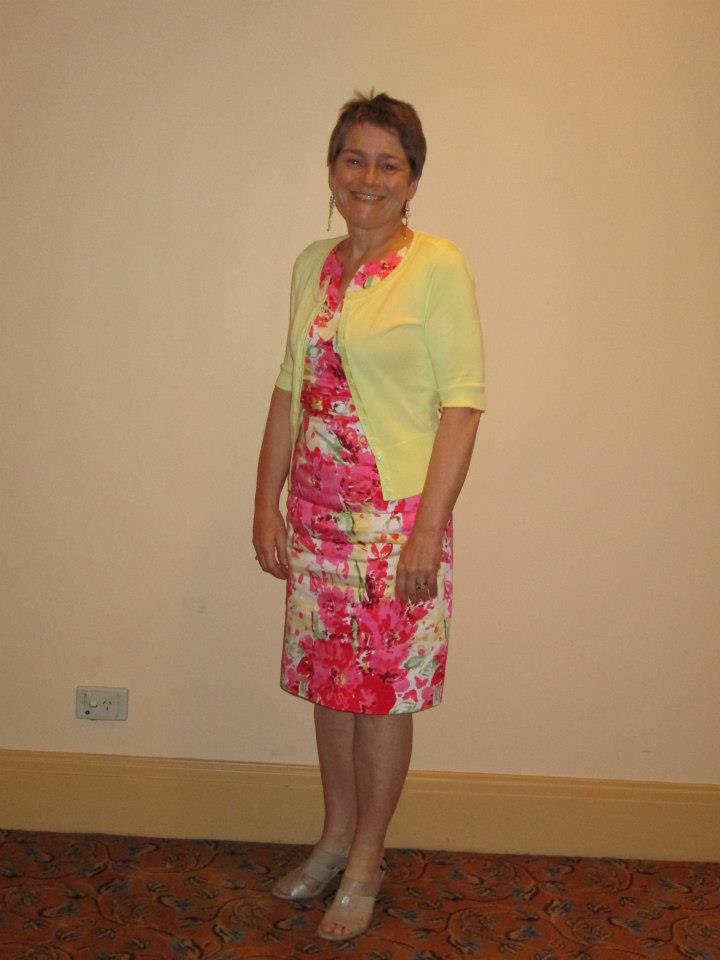
Friday, February 1, 2013

Midwives and telehealth

One of the projects I am currently working on is the Telehealth Support Project. This is a collaborative project that the Australian College of Midwives is involved with , alongside several nursing organisations, which is funded by the Australian Department of Health and Aging.

My involvement is supporting the development of an online education package which will support midwives to think about how they can implement telehealth into their practice, either in hospital or as private practicing midwives. This should be up and running by May. I am also involved in developing midwifery standards for telehealth practice.


Do you use telehealth in your practice? How do you use it? What has been your experiences? What would you like to see embedded into standards for telehealth practice?

Tuesday, January 29, 2013

What clinical experiences makes a good student midwife?

Midwifery education in Australia is about to undergo a review as the Nursing and Midwifery Board look at the standards underpinning midwifery education. One of the potential controversies that is likely to be debated during the consultation process, is the clinical requirements that students are expected to achieve.

Follow-through (continuity of care) experiences
At the moment, student midwives are required to obtain 20 follow-through, or continuity of care experiences during their education. During the continuity experience, the student follows a woman through her pregnancy, birth, and up to six weeks after the baby is born.  Students feel that this experience is an incomparable learning experience, and gives the student a sense of the whole context that a woman comes from, which is invaluable, whatever model of practice the student goes on to work in as a midwife.Students also find it easier to obtain experiences and skills such as perineal repair and vaginal examination when they are working with women they know well, as opposed to complete strangers. 

Workload
The problem that students are finding is that these experiences are very time-consuming, expensive and being on call means they are not free to work during their time off.  These requirements, along with all the other clinical requirements, are creating huge workloads for student midwives.

Contraversey
There are some midwifery educators who want to drop the number of continuity requirements because of workload issues, whilst others see the continuity experience as a non-negotiable elements of midwifery education, especially as the Australian maternity system is so fragmented.

Need to focus on normal midwifery
Having spent 11 years as an educator in New Zealand, as well as one year teaching in Australia, I whole heartedly support the continuity experience as one that not only provides clinical skills, but also re-enforces an understanding of childbirth as a holistic process, and not a fragmented one which is encouraged by the other clinical requirements such as 100 antenatal visits, 100 post natal visits,  and so on. I believe the continuity experience should not be a luxury or add-on, but the essential core of midiwfery education. However, my personal feeling (and not necessarily that of the Australian College of Midwives) is that student midwives in Australia have too big a clinical workload.

If any requirements are reduced, it should be those that focus on the technical, medical skills that are quickly picked up in hospital, such as working with women with epidural, or providing care for women who have had cesarean section - midwives pick up those skills quick enough once they are registered  because of the high epidural and cesarean rates in Australian hospitals.

Holistic midwifery
During their education program,  students must be given the opportunity to learn about supporting normal birth, and develop a full understanding the role of midwife. They may not go on to work in a continuity scheme as a midwife, but they will understand how midwifery is provided in that context so they can support their sisters who do work in these models of care. But more important, they have a framework on which they can base their understanding of childbirth, and guide their interactions with women and families, especially when they work in fragmented hospital systems.

If you are interested in reading more, here are some references that the Australian College of Midwives is currently collating:  http://www.midwives.org.au/scripts/cgiip.exe/WService=MIDW/ccms.r?PageId=10175

Are you a student midwife - what do you think about your clinical experience? How does it prepare you for practice as a midwife? What would you change, if anything?  Are you a pregnant woman? Have you had experience of working with a student midwife? What did you enjoy about having a student midwife?


Image: 'Soheyl'
http://www.flickr.com/photos/51035803024@N01/3098180874
Found on flickrcc.net

Sunday, January 27, 2013

5 top tips for pregnant women about to have their baby

I was asked the other day by some pregnant women to write a post about labour and birth. So here's my top 5 tips for women who are about to have a baby.

My default position is that every pregnant woman should have a known midwife who provides care throughout pregnancy and birth, and home birth for low-risk women. However, not every woman can have, or chooses, either. These tips are for women who have chosen to have a hospital birth, and in particular do not have their own midwife. 

1. Do not agree to have your labour induced the minute you reach 40 weeks pregnancy
There's no doubt that every day over 40 weeks of pregnancy seems like the longest day of your life. This problem is accentuated by all the modern tests we have that emphasize pregnancy dates. Gone are the days when women think about having their babies in terms of.... the phase of the moon.... month... or even season. These days we talk about giving birth down to the last day, hour, minute...

The reality is pregnancy varies considerably from woman to woman, and term pregnancy is defined up to 42 weeks gestation. There is evidence to show that mortality increases after 42 weeks pregnancy, however, the number of deaths are few, and each mother and baby's risks should be reviewed individually. My experience has been that when you try to induce labour before the mother's body is ready, the induction process is much longer and painful for the mother, with increased risks of medical intervention at a later stage.  This is what we call the "cascade of intervention", which is so often started by unnecessary induction of labour,

It goes without saying that if you have risk factors such as high blood pressure or your baby is showing signs of ill health, then you must follow the advice of your doctor. However, if you are fit and healthy, and have a low risk pregnancy, then resist pressure to have your labour induced. Focus on keeping active, yet relaxed, and spend your time preparing your body and mind for life as a new mum.

2. Stay at home as long as you can before you go into labour
The longer you stay in an environment where you feel relaxed and in control of what's happening to you, the better the outcome for you.  The longer you are in hospital, the greater risk you run of being submitted to unnecessary medical interventions. This can be a little tricky, especially when you are expecting your first baby because you don't know what to expect. I find it is often the dads/partners that get nervous and want to take their wife into hospital as soon as they can, so it is helpful to have someone with you at home who can support you. The best thing, if you can arrange it, is to get a midwife to come and check your progress at home, and make sure you do not go into hospital until you are in established labour.


3.  Have an advocate with you when you are in labour
By this, I mean, have someone with you who will ensure you have your wishes adhered to, that you are treated with respect, and that your right to informed choice is maintained at all times.  I don't think that husbands/partners can always do this because they can become very emotionally involved. So I think you should take a third person who is not so closely related to you. This person may be a friend or family member, or even an employed doula. This person must recognise that there are times when the best laid plans can turn to custard and medical intervention is required, but at the same time, be able to stand up for you against pressure for treatment, or attitudes that are inappropriate, and that everything is fully explained to you at all times.


4. Wait as long as you can before you have an epidural, if that is your choice of pain relief
I have mixed feelings about epidurals. On the one hand, when epidurals are well managed they can relieve severe pain, and assist mum to have a quiet, controlled birth which is a joy to behold. But in my experience, these births are few and far between.

Epidural interfere with the physiology of labour and birth, make labour longer, increase the risk of needing powerful drugs to increase contractions, prevent women from being able to push and increase the risk of a forceps delivery - with the accompanying risk of damage to mum and baby. Epidural also increase the risk of cesarean section for baby distress, which is thought to be caused because epidural increase maternal body temperature.

Bottem line: if you can manage your pain without an epidural, then do so. However, if you decide to have an epidural, leave it as long as you can before you have it because you will increase your chances of having a normal birth. 


5. Do not agree to continuous baby heart monitoring with a CTG machine unless your doctor or midwife can provide strong evidence that your baby is at risk
Many hospitals insist that women have a CTG baby heart monitoring trace when they first go into hospital, and even that they have continuous monitoring throughout labour. However, for low risk women, this medical intervention has been shown to have no impact on birth outcomes, and indeed, increases a woman's risk of procedures such as cesarean section.

If you are not sure what goes on in your hospital, check out their policies and guidelines for labour and birth while you are still pregnant. The more homework you do before you go into labour, the better prepared you will be.


What are your top tips for a pregnant women to think about before she has her baby?

If you want to read more details with links to research evidence, have a look at this article: What to reject when you're expecting. 10 procedures to think twice about during your pregnancy. The other blog that presents excellent evidence-based information about birth is: Science and Sensibility. And if you're a dad, may I recommend this blog: Beer and Bubs. As a midwife, some of the places I go for evidence-based information about labour and birth are:

Image: 'untitled'
http://www.flickr.com/photos/48819968@N00/698687002
Found on flickrcc.net

Thursday, January 24, 2013

Needing help to develop smartphone apps for the Australian College of Midwives

One of the things that really stands out to me, working with midwives in Australia, is how "mobile" they are. They do not have the time to sit around for ages glued to a computer, but they do like to access information, resources and services via their smart phones. Consequently, I have been thinking about what services and resources the Australian College of Midwives (ACM) can provide to midwives via smart phone apps.

What could be turned into apps?
Needless to say, there are any number of resources that could be turned into apps for midwives from straight forward pieces of information, such as the Midwifery Guidelines for Consultation & Referral, to more interactive activities such as the recording of CPD straight into the midwife's MPR portfolio system.

Making your own apps?
I know there is software available on the Internet that allows you to make your own apps, such as TheAppBuilder, but to be honest, I do not have the time these days to investigate or "play" with development. But at the same time, the ACM  are getting an increasing number of requests from midwives for  "mobilize" itself.

Student project
What I was thinking was that developing some apps for the Australian College of Midwives would be a nice project for IT students. So, if you know of any lecturers in the university or tafe sector who might be interested in working with us, please let me know.

Have you ever made your own apps? What software did you use, and what tips would you pass on? Have you come across any apps that would be relevant and useful for midwives?

Image: 'Make the Call'
http://www.flickr.com/photos/51035555243@N01/296372880
Found on flickrcc.net

Monday, January 21, 2013

A response (of sorts) from The Warriors about their sponsorship deal with a formula feed company

At the end of last year I wrote to The Warriors and CEO of the NRL, in my role of Professional Development Officer, about the concerns the Australian College of Midwives has about The Warriors new sponsorship deal with the formula feed company,  Fernbaby. Needless to say, the response has been less than reassuring!

Sponsorship deal
Toward the end of last year I blogged about my concern that the rugby league team, The Warriors, had signed a sponsorship deal with a formula feed company. This includes wearing the company's logo on their shorts. The concern is that the World Health Organisation marketing of formula product has been contravened, with the implication of giving mixed messages to families about breastfeeding. The Warriors is giving the message that they support formula feeding, which we know is detrimental to health. This is particularly concerning considering the population that supports The Warriors are at especial risk of exactly the health conditions that formula milk increases.

Australian College of Midwives
In December I supported the posting of letters to The Warriors and the CEO of the NRL, in conjunction with UNICEF, voicing our concerns. Interestingly, there are constraints around rugby companies signing up for sponsorship from cigarette companies, yet no such consideration with this equally importnat public health issue.

Newspaper
As yet, we have not had an official reply. However, both the NRL and Warriors have spoken to a sports reporter, Daniel Lane, and confirmed that The Warriors will be going ahead with the deal, and that it has not contravened the NRL sponsorship guidelines.

In thinking about what we can do next, I am considering that we need to write a paper giving guidance about marketing, sponsorship and issues about engaging with formula companies, for the NRL and similar bodies. What do you think? What do you think should be our next move, or do you think we're getting our knickers in a twist about a non-issue?


Saturday, January 12, 2013

The pros and cons of Kobo

I have been reading books via a Kindle app on my smartphone for some months, but because my phone is quite small, the reading experience has not been a particularly comfortable one - I have found it to be great when I'm doing short journeys, on the bus to work, for example. However, for serious reading sessions, the print has been too small, and I have to be forever turning the pages. When I decided at long last that I would succumb and buy an eReader, my daughter beat me to it and gave me a Kobo eReader for Christmas.

What I like about my Kobo
I am really enjoying my Kobo Glo. It's light to carry and easy to use. The pages turn with a light tap. There are a number of functions such as spell check and annotation, if you want to little more interactivity.

There is a back light which is meant to facilitate reading at night, but I have it on all the time. I am not sure how this will impact on battery time, but I am happy to accept a shorter battery life. The battery is supposed to last for a month, but I am not too sure about this. I haven't had it long enough to assess, but it looks to me that this is a little optimistic.

It did take me a little while to work out how to sync the reader with my Kobo desktop. Unfortunately, the instructions on the website were not as clear as they could be, but I got there in the end.

I have read various complaints on the internet about Kobo, saying that it crashes a lot, but I haven't found that to be a problem - the reader itself works like a dream. But.....

What drives me mad about Kobo
The thing that has put me right off Kobo is the website and experience of buying a book. I have lost count of the number of computers I have used, and Internet browsers, but I seem to come up across the same problems and issues.
  • Getting messages that say - "Sorry, we do not have any items at the time"
I don't know if the web site crashes at times of extreme use, or what happens. Sometimes, the message clears when I clear my browsing history. The problem is...in one session on the website, I might have to clear my browsing history at least half a dozen times, which is really annoying.
  • Having the currency appear in New Zealand dollars, and not Australian dollars.
This has come about because I originally set up my account when I was in New Zealand at Christmas. But now I am back in Australia, the currency has not changed in response to my change in IP. To be fair, the Kobo team are trying to fix this, but it is taking forever to come right, and is irritating to say the least.

The other things about the web site that are irritating are:
  • Having to sign into my account every time I buy a book , even in the same browsing session.
  • Having to buy each book individually instead of being able to put it in a shopping basket and buy all in one go.
  • Having no way to save to a wish list.
Comparing Kobo to Amazon

The book prices do not appear to be much different, and whilst Amazon probably has a greater range of books than Kobo, I have always been able to find the books I want on Kobo.

I do not have a Kindle eReader, but as I have said before, I do use a Kindle app on my smartphone. Whilst I love my Kobo eReader, the experience of the Kobo website is very poor compared to Amazon. I have never had any problems shopping, buying or  downloading books from Amazon.

The other thing that gives Kindle the edge over Kobo is I am able to download hundreds of free books in the genre I read....historical romance. I even belong to an Amazon email group that constantly updates readers when new freebies are released. Kobo does have some free books that you can download, but no where to the extent that Amazon does.

My recommendation
I don't think I can recommond one reader over another because I haven't used a Kindle. I am certainly loving my Kobo. But my very frustrating experiences of the Kobo website has put Amazon and Kindle way ahead of Kobo. So if you're thinking of buying an eReader, it is worth taking these things into account.

Do you have a Kobo eReader? What experiences have you had? What would you recommend?

Sunday, January 6, 2013

I never thought I'd say this but....

...I have an eReader!

Yes...I have been given a Kobo eReader for Christmas and love it.

I have always been skeptical about eBooks, until recently.

I love reading and I love paper books. I love the whole experience of books....browsing around book shops...ordering them from Amazon...waiting for them to arrive in the post (and let's face it...I don't get anything else through the post these days...even bills and bank statements arrive by email these days!)...settling into the bath with my latest trashy bodice ripper.....collecting flashy hard backs that I never read, but look intellectual on the book shelf...

I have always been of the opinion that you can never replicate that experience with eBooks. 

But the trouble with paper books is they take up a lot of room, and I have been forced to give many away over the years every time we have moved house.

Books are also difficult to travel with. They take up a lot of room in a suitcase. I always travel with...what I call..disposable books....books that I leave in hotel rooms or airport when I have finished reading them.

So to address the problem of traveling with books (especially on the bus, back and forth to work), I have recently discovered the joys of reading with a Kindle app, which I have downloaded onto my smartphone. I download free books from Amazon, which are fun but are easily deleted when I have finished. The only problem with the smartphone is the pages are very small, and fiddly to read.

My eReader is bigger and easier to read....I don't need my glasses! It also has back lighting, which means I can read it in bed without disturbing my hubby, or requiring a big torch. I have even had it in the bath, although I am terrified of dropping it!

I am sure that eBooks will never totally replace paper books for me. I still like to buy paper books in book shops...collect them...smell them, feel and look at them...all experiences that you cannot replicate electronically. However, where my eReader will come into its own is when I am traveling. It will be so much easier to travel with a device that weighs a couple of pounds, compared to 10 books that take up half my suitcase.

What do you think about eBooks? Have you ever read one? Do you have an eReader? Do you think paper books will eventually become extinct?


Thursday, December 20, 2012

and now....for the rest of my life...

 2012 was the year that I lost 31.5 kg and became a Life-time Member of Weight Watchers. I am not trying to market Weight Watchers, but I have to say that the program was a very important part of my weight loss journey, and continues to be so.

The advantage of being a Weight Watchers life-time member is that you get free visits to meetings and discount on products. But there are certain conditions you have to fulfil, such as continue to be within 2 kg of your target weight, and visit a meeting to be weighed, at least every month. The beauty of this ongoing program is it provides continuing motivation and support for me to maintain my weight.


What I have found over the last few weeks since reaching my goal weight is that it's difficult to maintain my motivation. Part of the problem is I feel I have nothing to strive for. It doesn't take much for me to skip my exercise or go outside my eating plan. I've come to the conclusion that losing weight is easy....keeping it off is a whole other ball game!

Have you ever achieved a goal and then wondered “what's next?” How do you deal with that feeling of achieving something and finding it to be an anti-climax? 

Any suggestions for long term strategies for how I can keep my weight off?

Tuesday, December 18, 2012

New campaign to stamp out female genital mutilation in Australia

It looks like 2013 is going to shape up as the year Australia focuses on female genital mutilation. FGM is illegal in Australia, to perform the procedure, or support the movement of girls to another country to have it done.

This week, Julia Gillard announced a range of activities aimed to find out exactly what is happening in Australia, provide education to both communities and health professionals, and review laws about FGM. The Australian College of Midwives supports this move and will be working the health minister, Tanya Plibersek to help her in any way we can.

I was talking to my husband about this the other night and he felt, as a non-health professional, that there has to be a raising of awareness of the general population, so that we not only know what FGM is, but understand the long-term implications of the procedure.  We also need to understand that FGM is a cultural, not religious, issue which in turn will help us understand how to address the problem.

What do you know about FGM? Have you come across it in your every day life? What would you do if a girl disclosed that she had had it done to her? If you are a midwife, have you ever come across it in your practice?


Image: 'haunting eyes'
http://www.flickr.com/photos/62849250@N00/542892224
Found on flickrcc.net


Sunday, December 16, 2012

Disposable friends - would you like some?

One of the challenges of moving to a new place, especially a new country, is that you have to start from scratch with making friends. I have found this hasn't been too difficult in the past because I have met people through my children - at school, play groups, Saturday sports and so on. But with my move to Canberra, and being on my own, I am having to make a determined effort to get out and meet people.

I have found the most successful way of meeting people in Canberra has been via the Internet. There are two main places I go to that help me get out and about. The first place is HerCanberra, which is led by Amanda Whitley, based around a blog, as well as Facebook and Twitter. It caters for women, although I am sure there are topics that men would be interested in. Not only does HerCanberra spread the news of local events and places of interest in Canberra, but it organises F2F events.

This week I am going to my second evening dinner organised by HerCanberra. I am really looking forward to it because Amanda has told us we must all get dressed up. So I'm excited about wearing a new outfit which I have just bought, although I am stressing about what bling to wear with it, which is a whole other story.

My first HerCanberra evening dinner in November was great fun....probably because I drank a little too much wine! My only critique, as such, was that the age range was a tad too young for me. The women who attended were in their late 20s and 30s. They are more interested in their young kids, and I spent all evening hearing their birth stories, once I made the mistake of admitting I am a midwife. But at the same time, it was a good thing in my new role at the Australian College of Midwives, to hear about the issues that face birthing women in Canberra and Australia.

The second site I am finding to be a great resource is Meetup.Com. This online movement started off in the USA after 911, as a way of bringing people together, who don't necessarily want to find romantic partners, but are interested in meeting people they can hang out with and share interests. This movement seems to be very successful in Canberra with any number of interests groups – apparently, this is because the population is so transient, so people need a quick and effective to find out what's going on.

I have been to a couple of general meet-ups at the pub but don't particularly enjoy them. It feels a little weird going to the pub by myself, and I feel just a tad vulnerable in a large, mixed-gender group. However, I have also joined some smaller groups, such as the Canberra Movie Goers and Canberra Bloggers, and been to a few events and really enjoyed myself. I have met some great people...shared interesting conversations...and had fun. And at the end of each event, gone home feeling great about myself, but at the end of the day, have no ties or expectations to bog me down.

What it has got me thinking about is...does groups like Meetup.com allow us to do away with the concept of friendship, or make it more of a disposable commodity? Think about yourself...why do you have friends? For company...to go to events...share interests...and so on. But there is a downside to friendship. It has to be maintained, which means work. Friends can demand time from you...make expectations of you...cost you money. Friendship can turn nasty...friends can use and betray you. 

So are disposable friends the way to go? What do you think?

Image: '61098'
http://www.flickr.com/photos/71865026@N00/3280003051
Found on flickrcc.net

Thursday, December 6, 2012

And so it begins....


The big news over the last two days is that William and Kate are expecting their first baby.

Sadly, Kate is suffering severe morning sickness, which can be the most miserable thing in the world, and really takes the shine off the good news. But it doesn't stop me (and everyone else) speculating that she's expecting twins, as morning sickness can be one symptom of multiple pregnancy!?

As a midwife I cannot help wishing that she'd be a poster girl for normal birth. How cool would it be if she had a waterbirth at home....at Buckingham Palace! However, I have a horrible feeling her elective cesarean section is already booked!


Image: 'Royal Wedding of William and Catherine Duke & Duchess of Cambridge'
http://www.flickr.com/photos/48399297@N04/5669247285
Found on flickrcc.net

Sunday, December 2, 2012

Book review: Lives we leave behind by Maxine Alterio

Lives we leave behind is the latest novel by Maxine Alterio. Maxine is a principle lecturer at Otago Polytechnic, in Dunedin, New Zealand and is extremely well known in academic circles for her work on reflective practice and story telling. I have used her academic work extensively in my own studies, but this is the first time I have read any of her fiction.

Lives we leave behind is the story of two New Zealand nurses, Meg Dutton and Addie Harrington, who travel from New Zealand as young, naive, Kiwi girls seeking adventure, and wanting to do their bit to help "the boys" in the First World War. They are thrown together as they share a berth on the hospital ship Maheno, which takes them to Egypt for their first posting. At first it looks like they will never have anything in common. Addie disapproves of Meg's frivolous approach to life, whilst Meg thinks Addie is a stick in the mud. But the horrors of war and their own personal traumas forms a deep and abiding friendship.

The story of Addie and Meg is very engaging, especially as Meg falls in love with a British surgeon, Wallace Madison. You just know it's going to end in tears, but keep hoping that Meg gets her happy-ever-after. Addie has her own romantic challenges as the men in her life are permanently changed by both physical and psychological impacts of war. 

However, for all the personal stories that thread themselves through this book to entertain us, it is the background history and detail that captured my attention, which I feel is the real strength of this book. Alterio has done an amazing job of researching the experiences of Kiwi nurses in the First World War. The use of language, historical fact and medical details transport you firstly to the hot, stinking military hospitals in Egypt to the freezing battlegrounds in France. Being a nurse myself, and having a great interest in history, I can attest to the authenticity of Alterio's writing, which is extremely easy to follow, and doesn't bog you down with detail. Yet at the same time, little touches here and there alert you to the amount of research that Alterio has carried out.

I highly recommend this book which not only entertains but also educates, and brings the reader's attention to the dedication and bravery of these unsung heroines.


Saturday, December 1, 2012

It's not about the winning, it's about the finishing...or is it?!

 Last Sunday I took part in my very first triathlon. Oh...alright....it was a baby one - 200 meter swim, 8km bike ride and 2km run - but it was bloody hard work, and a major workout for me..

The morning didn't start well. I had to cycle to get there and developed a puncture about 2km away from the start. Actually, I was a tad relieved thinking I'd have a legitimate excuse not to do it...but blow me...there was a cycle repair man who changed my inner tube in about 20 seconds flat, to my disgust.

We were split into age groups, and my group, 40+ women were the last group of people to start. The first leg of the race was the swim in Lake Burley. I have to admit to having a number of concerns about the quality of the water...and what lives in the lake! I had visions of emerging from the water...not like the beautiful Ursula Andress rising out of the sea in James Bond Dr NO....but more like a green lake monster...with limbs missing and being horribly deformed like I had an overdose of nuclear poisoning. However, the water was beautifully clear, warm and very refreshing. And I didn't get attacked by any eels or other underwater iggly wigglies, so that was a bonus.

Within seconds of the swim starting I knew I was in trouble.Everyone was powering away with their frantic crawl and I was gliding along with my geriatric breast stroke. The distance wasn't an issue for me but speed was...I was at least 10 minutes behind everyone else. So needless to say, I was last out of the lake and already had no chance of catching up.

The change over to cycling was the next nightmare. It took forever to get my running pants on because I was wet, and I got twigs and leaves stuck to me...in my shoes...knickers...not at all comfortable. The cycle ride wasn't too bad. I was pretty pleased with how well I did around the course and was celebrating that I was catching up until the official told me that I had to go around a second time....

By the time I got to my run, I could hardly put one foot in front of the other, so mostly walked the first kilometer. I ran the second kilometer because it was all down hill, and my darling friend Deborah Davis, ran with me for the last 500m, which made all the difference.

The result...I came last!

I knew I was going to be last, from the time of the swim, and the thing I was dreading the most was the pity clap as I crossed the finish line...you know what I mean...when everyone thinks...oh well, we'd better give that poor woman a clap because at least she finished...even if it was half a day after everyone else!!

Thankfully, by the time I crossed the line, everyone had lost interest and gone on to prize giving...so I didn't even get a pity clap.

What I took away from this experience is that I can do anything if I put my mind to it.  At the end of January this year, I was flat on my back with a partially prolapsed disc...and I still have permanent nerve damage to my right leg. But here I am...nine months later...a tri-athlete!

The other thing that struck me was that there are all sorts of shapes and sizes and abilities amongst us women. I tell you...those all-in-one running suits don't hide a thing. So if you have a teenage girl worried about her body, take her to an event like this to show her what real women look like...and what we can achieve.

But if one more person says to me...it's not about the winning, it's about finishing, I shall poke them in the eye!!!!